
Exact commercial route
Air Conditioning Repair
Troubleshoot central AC cooling, airflow, controls, and condensate issues.
Explore the project →
Explore the complete heating, air conditioning, ventilation, indoor-air-quality, and control landscape—then compare local project options across the Philadelphia DMA region.
A broad “HVAC” label can hide very different equipment, safety considerations and specialist skills. Start by identifying the system and the work you need.
Troubleshoot central AC cooling, airflow, controls, and condensate issues.
Explore the project →
Plan cold-climate heating and cooling with ducted or ductless equipment.
Explore the project →
Replace or add gas, oil, propane, or electric forced-air heat.
Explore the project →
Work with hydronic or steam heat without confusing it with forced air.
Explore the project →
Add room-by-room heating and cooling without full ductwork.
Explore the project →
Plan supply, return, sealing, insulation, and static-pressure performance.
Explore the project →Furnaces, boilers, heat pumps, baseboard systems, radiant heat, supplemental heaters, controls, and seasonal service require different decisions.
Central air, ductless mini-splits, window units, packaged equipment, rooftop units, coils, compressors, and refrigerant work are not interchangeable.
Use the central AC repair guide when cooling has failed, the AC installation guide for new equipment, or the mini-split guide when full ducts are not practical.
Ducted, ductless, hybrid, air-source, and geothermal systems differ in distribution, low-temperature capacity, controls, electrical scope, and installed cost.
Compare heating and cooling loads with selected-equipment output rather than relying on square-foot rules.
Choose ducts, indoor heads, hydronic emitters, or a mixed design around the building.
Discuss low-temperature capacity, defrost, backup heat, snow clearance, and controls.
Comfort problems may come from distribution rather than the heating or cooling equipment. Ventilation pages cover supply and return ducts, sealing, insulation, balancing, exhaust, whole-home ventilation, and recovery ventilators.
Start with duct installation and replacement, then distinguish sealing, insulation, measured balancing, and cleaning.
Bathroom and kitchen ventilation need capture, duct routes, exterior termination, controls, and make-up-air review.
ERV and HRV choices depend on the enclosure, occupancy, humidity, winter frost strategy, and maintenance access.
The site covers filters, HEPA concepts, purifiers, UV equipment, humidifiers, dehumidifiers, odor and smoke control, sensors, and measurement—without promising medical outcomes.
Compare available service options, identify the equipment involved and describe the comfort or air-quality concern clearly before requesting quotes.
Published numbers require a verified project-specific national range and never substitute for a property-specific proposal.
| Exact project | Published range | Important scope note |
|---|---|---|
| Furnace installation | $3,000–$9,500+ | Fuel, efficiency, size, ducts, venting, permits, and removal can change a quote. |
| Heat pump installation | $5,000–$15,000+ | Ductless, central, hybrid, and geothermal systems have different ranges. |
| Thermostat installation | $140–$500 typical | Device type, wiring, compatibility, and controls integration matter. |
| Window AC installation | $300–$1,100+ | Unit, support, window type, sealing, and electrical work affect scope. |
These are national planning estimates, not Philadelphia averages, contractor bids, or guaranteed prices. See each service page for its exact project scope.
Commercial availability is controlled by the provided ZIP allowlist. City pages add climate, housing, equipment, and project context without claiming a local office.
Rowhouses, historic masonry, compact mechanical rooms, party walls, and humid summers make load, ventilation, condensate, and equipment placement central to planning.
Read the local guide →Attached housing and varied duct conditions make airflow measurements, return paths, electrical capacity, and exact project scope especially important.
Read the local guide →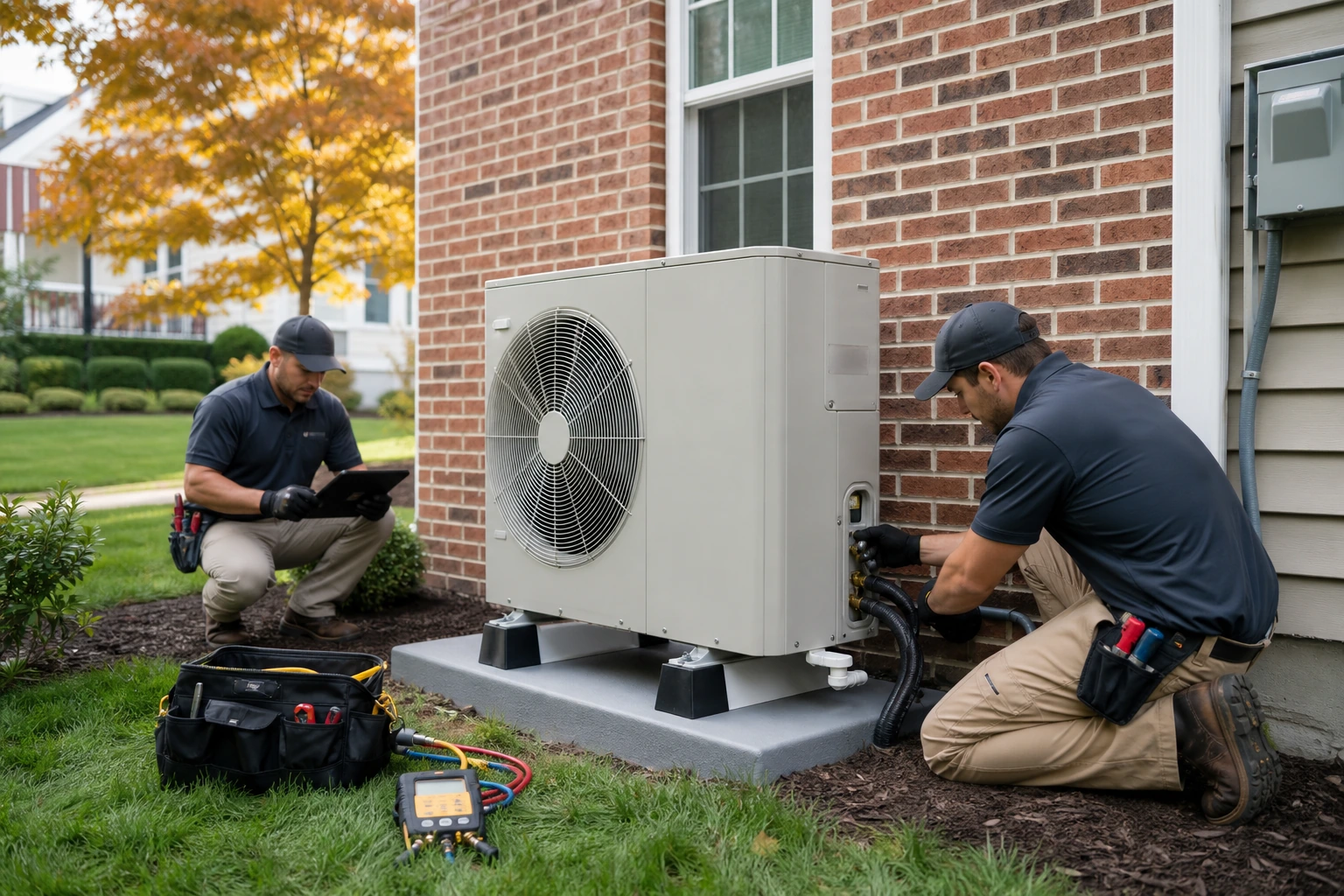
Mixed historic and newer housing creates a broad choice among boilers, furnaces, central air, ductless systems, and heat pumps.
Read the local guide →
Older urban homes and suburban retrofits make control compatibility, distribution condition, permits, and state trade credentials part of a complete comparison.
Read the local guide →A heating-heavy season and mixed fuel systems make furnace type, venting, load, ducts, and repair history important quote inputs.
Read the local guide →
Cold winters and warm, humid summers reward equipment choices that address both low-temperature heating capacity and sensible humidity control.
Read the local guide →
Explore local information for 311 ZIPs in Pennsylvania, 184 in New Jersey and 42 in Delaware.
Enter your ZIP code to see which heating and cooling services are currently available, then describe your project and request up to 4 local quotes.
See the complete coverage area, review city HVAC guides, or browse HVAC services.
Choose the exact system and project, confirm a covered ZIP, and submit one request. When production consent and coverage are active, the request may be matched with up to 4 local pros.
No. Philadelphia HVAC Quotes is an independent project-matching website, not an HVAC contractor.
The supplied DMA 504 allowlist contains 537 ZIP codes: 311 in Pennsylvania, 184 in New Jersey, and 42 in Delaware. A ZIP search confirms whether a request is in the configured zone.
Availability varies by project and ZIP. Enter your ZIP code and choose from the heating and cooling services currently offered near you.
No. Published figures are clearly labeled national planning estimates. A property-specific local quote depends on equipment, load, access, distribution, electrical or fuel work, and permits.